
Most tax returns have errors. We counted.
Cranston's CPAs re-prepared a sample of tax returns filed by other CPA firms, using the same client documents. 4 in 10 returns had an error that changed the tax owed. Cranston's software, given the same documents, made that kind of error in fewer than 1 in 10.
1040 · 1065 · 1120 · 1120-S · Drake Tax, CCH Axcess, Lacerte, and UltraTax
What the study found.
Each return in the sample was re-prepared from the original client documents, then compared line by line with the return the firm filed. Every difference was classified as material or non-material.
4 in 10 returns had a material error
A material error changes the tax owed. Examples from the sample: a missed election, a mis-entered cost basis, a limitation applied incorrectly.
Found by re-preparing the return, not by reading it.
8 in 10 had non-material errors
A non-material error does not change the tax owed, but the return differs from a correctly prepared one. Examples: missing carryforward schedules, positions applied inconsistently across forms.
The tax was right. The work was not.
Cranston: fewer than 1 in 10
Cranston's software prepared the same returns from the same documents. The same CPAs scored its drafts by the same rules, before any human review.
Same documents. Same scoring. Fewer errors.
Your firm is probably one of the better ones.
The firms in the sample were established firms with credentialed staff. The error rates reflect workload, not skill: returns prepared by hand, under deadline, by whoever had capacity that week.
That matters when you add capacity. A new preparer comes from the same population the study measured. Cranston does not.
How the study worked.
Each return was prepared three times: by the original firm, by Cranston's CPAs, and by Cranston's software. All three worked from the same client documents.
Collect the sample
Each sampled return came with its full client document package and the return the firm filed.
Re-prepare by hand
Cranston's CPAs re-prepared each return from the documents alone, then compared their return with the filed return, line by line.
Classify each difference
Material means the difference changes the tax owed. Non-material means the return differs from a correctly prepared one, but the tax owed is the same.
Score Cranston the same way
Cranston's software prepared the same returns from the same documents. The same CPAs scored its drafts by the same rules.
A new preparer, compared with Cranston.
Cranston prepares the first draft in your tax software, from the client documents. Your reviewer checks the draft and signs the return, the same as with any preparer.
A new hire or offshore preparer
- Comes from the population the study measured
- Enters data by hand, under deadline
- Errors are found at review, or after filing
- Needs training every season
- Material errors in fewer than 1 in 10 drafts
- Every figure links to its source document
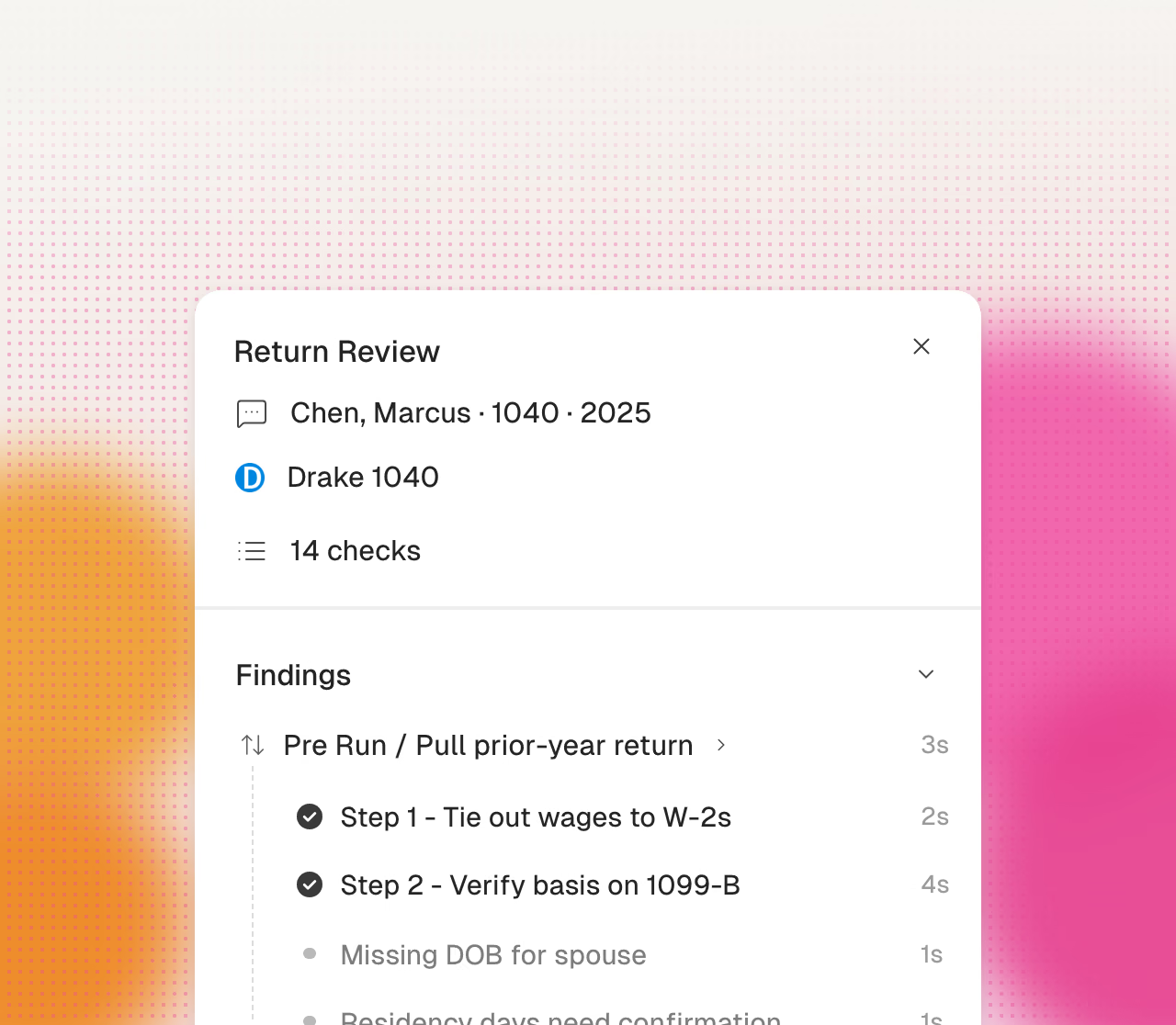
- Flags what it cannot verify instead of guessing
- Works inside Drake, CCH Axcess, Lacerte, and UltraTax
Your reviewer signs every return.
Cranston prepares and checks the return. Your reviewer signs it. Client data stays in the United States.
Your reviewer signs off
Cranston prepares the return and flags what it finds. Review and signature stay with your firm.
Source-linked figures
Every number on the return links back to the document it came from.
Built for sensitive data
Data is encrypted at rest and in transit. SOC 2 examination is in progress.
Figures on this page are from an internal study by Cranston's tax team. Ask for the methodology on the call.
Try Cranston on one of your returns.
Bring a real return package to the call. Cranston prepares the draft in your tax software. Compare the draft with what your preparer filed.
Book a 30-minute demo